
What Animals Are Primary Consumers? 15 Examples in Nature
Primary consumers are animals that get their energy by eating producers, such as plants, algae, or phytoplankton. They play an important role in food chains because they transfer energy from plants to animals that eat them. Many primary consumers are herbivores, although some eat tiny plant-like organisms in water.
What Are Primary Consumers?
In an ecosystem, producers make their own food. Green plants use sunlight to make food through photosynthesis, while algae and phytoplankton do something similar in aquatic environments. Primary consumers feed directly on these producers, making them the second level of a food chain.
For example, grass grows in a meadow, a grasshopper eats the grass, and a frog may eat the grasshopper. In this food chain, the grasshopper is the primary consumer.
15 Examples of Primary Consumers in Nature
1. Grasshopper
Grasshoppers eat grasses, leaves, and other plant material. In a meadow food chain, they transfer energy stored in plants to animals such as birds and frogs.
2. Rabbit
Rabbits feed on grasses, herbs, leaves, and young shoots. Because they eat plants directly, rabbits are primary consumers in many grassland and woodland ecosystems.
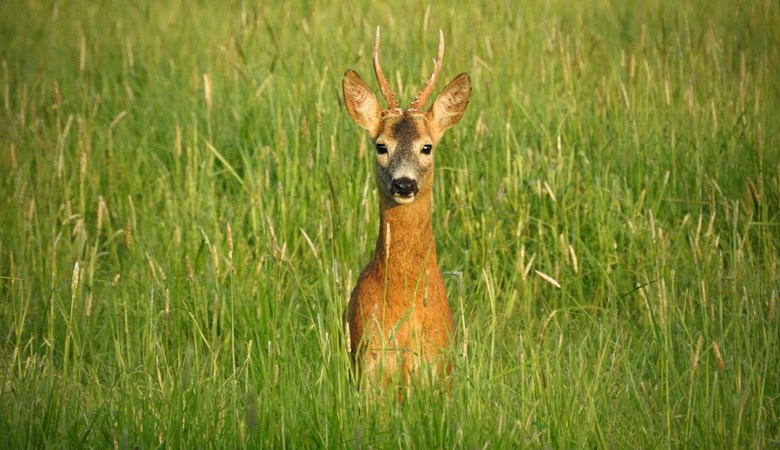
3. Deer
Deer browse on leaves, twigs, grasses, and other vegetation. They help move energy from forest and meadow plants into the wider food web.
4. Cow
Cows graze on grass and other plants. As herbivores, they are common examples of primary consumers in pasture and farm ecosystems.
5. Sheep
Sheep mainly eat grasses, clover, and other low-growing plants. Their grazing makes them primary consumers in grassland environments.
6. Goat
Goats eat leaves, shrubs, shoots, and grasses. Their varied plant-based diet makes them primary consumers in many dry and mountainous habitats.
7. Caterpillar
Many caterpillars feed on leaves as they grow. They are an important food source for birds and other predators, linking plants to higher levels of the food chain.
8. Snail
Many land snails eat leaves, algae, and soft plant material. When they feed directly on producers, they act as primary consumers in gardens, forests, and damp habitats.
9. Zebra
Zebras graze on grasses across African savannas. They depend on plant growth for energy and are prey for large carnivores.
10. Giraffe
Giraffes browse on leaves and shoots, especially from acacia trees. They are primary consumers because they obtain energy directly from plants.
11. Elephant
Elephants eat grasses, leaves, bark, roots, and fruit. Their feeding can shape vegetation and spread seeds, while making them primary consumers in their habitats.
12. Beaver
Beavers eat bark, twigs, leaves, and aquatic plants. Their diet connects plant energy to wetland food webs, and their dam-building also changes local habitats.
13. Field Mouse
Many field mice eat seeds, grains, nuts, and other plant material, although some also eat insects. When feeding on plants or seeds, they function as primary consumers.
14. Aphid
Aphids use specialized mouthparts to draw sugary sap from plants. They are small but important primary consumers and are eaten by ladybugs, lacewings, and other predators.
15. Zooplankton
Many zooplankton, including tiny crustaceans such as water fleas, feed on phytoplankton. They are primary consumers in aquatic food chains and provide food for fish and other animals.
Why Are Primary Consumers Important?
Primary consumers help pass energy from producers to the animals that eat them. They also influence plant growth, help disperse seeds in some ecosystems, and provide food for predators. Without them, many food chains would lose an essential link.
Are All Plant-Eating Animals Primary Consumers?
Animals that eat producers are generally primary consumers when they feed directly on plants, algae, or phytoplankton. However, some animals have mixed diets. An omnivore may act as a primary consumer when eating plants and as a consumer at another level when eating animals. The animal’s role depends on what it is eating in that particular food chain.
Primary Consumers vs. Producers and Secondary Consumers
Producers make their own food, such as grass and phytoplankton. Primary consumers eat producers, such as rabbits and grasshoppers. Secondary consumers eat primary consumers, such as frogs that eat grasshoppers. These roles describe how energy moves through an ecosystem.
Conclusion
Primary consumers are a vital part of nature because they feed directly on plants and other producers. Grasshoppers, rabbits, deer, cows, caterpillars, aphids, and zooplankton are just a few examples. Understanding their role makes it easier to see how food chains connect living things and keep ecosystems functioning.